
Award Painting insights
How often a Sydney house exterior needs repainting, by surface
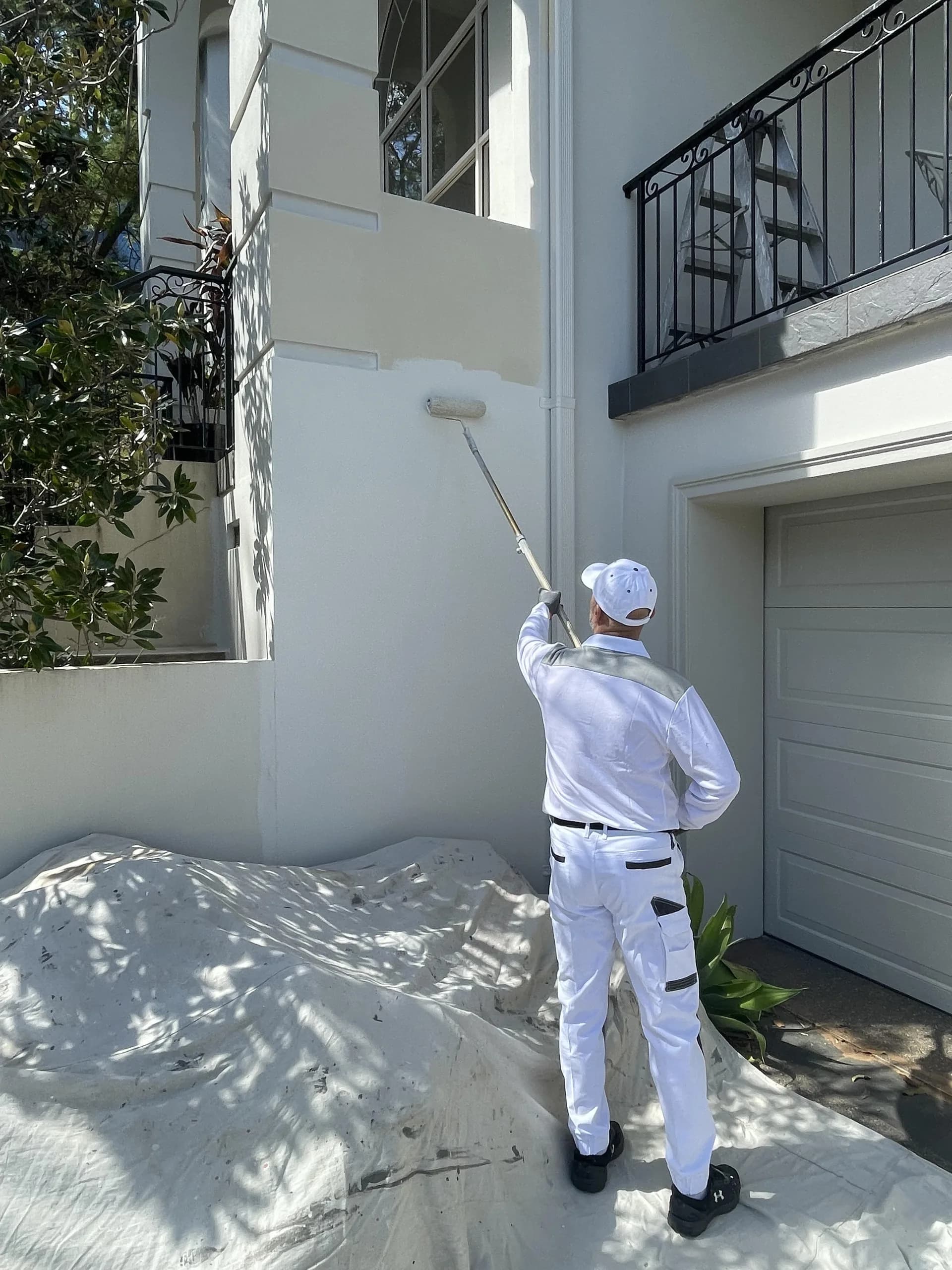
Most Sydney house exteriors need repainting every 5 to 15 years, and the surface sets where in that range your home falls. Render holds paint the longest, weatherboard sits mid-range, and oiled cedar needs recoating soonest. Trims and fascias fail before the walls behind them.
Key takeaways
- Render runs the longest cycles: 10 to 15 years when the last prep was sound.
- Weatherboard sits at 7 to 10 years, because timber moves and holds moisture.
- Cedar oils need recoating every 2 to 4 years, the shortest cycle of any surface.
- Trims and fascias fail first, and the weather side fails fastest.
- North and west elevations age quickest under Australian sun.
Render holds paint the longest
Rendered masonry is the most stable surface a paint film ever sits on. It does not swell and shrink with moisture the way timber does, so the film above it is not being stretched and relaxed through every wet week and dry spell. On sound render that was cured, cleaned and primed properly before its last coat, expect 10 to 15 years from a premium exterior acrylic before the wall genuinely needs repainting rather than just a wash.
The number comes down for 2 reasons: hairline cracking in the render itself, which telegraphs through the film, and hard weather exposure on elevated or unsheltered walls. Both are substrate problems rather than paint problems, which is why our exterior painting process treats crack repair and surface assessment as part of the job, not an optional extra.
Weatherboard runs a shorter clock
Timber weatherboards move. They absorb moisture and swell, then dry out and shrink, and every cycle flexes the paint film riding on top. The film tolerates that flexing for years, then lets go at the joints, nail heads and end grain first: exactly the places water enters. Expect 7 to 10 years from weatherboard in Sydney conditions, and expect the 2 sides of the same house to age at different rates.
Timing also matters more on timber than on masonry, because a coat applied in the wrong conditions starts life compromised and fails early. We cover the seasonal side of that decision in the best time of year to paint an exterior in Sydney.
Cedar asks for the most attention
Western red cedar appears all over the upper North Shore, particularly on homes built from the 1960s to the 1980s, and it is the most demanding exterior surface there is. Cedar is finished with penetrating oils and stains rather than film-forming paints, and oils do not fail by peeling: they fade, dry out and let the timber grey off quietly. Recoating every 2 to 4 years keeps the colour even and the timber protected, and timber-finish manufacturers such as Cabot's publish recoat guidance in that same band for exterior oils.
Cedar also punishes neglect harder than anything else on this page. Left 8 or 10 years, the work stops being a maintenance coat and becomes a full strip or a heavy sand back to bright timber, at several times the cost. A scheduled painting maintenance program earns its keep on cedar faster than on any other surface: small, planned recoats instead of periodic rescues.
Painted and bagged brick
Painted brick and bagged brick behave like render: the masonry is stable, so the film lasts. Expect 8 to 15 years depending on exposure, with sheltered elevations at the top of the range and walls copping full western sun at the bottom. The watch-point on brick is moisture from behind. A leaking gutter or rising damp pushes salts through the wall and lifts paint in patches that no coating grade prevents. Fix the water first and the repaint cycle behaves like render's.
Trims and fascias fail first
Fascias, barge boards, window sills and gloss trims are the facade's early warning system. They carry paint on horizontal and semi-horizontal surfaces that hold water and face the sky's UV directly, so they fail years before the walls behind them: 5 to 7 years is a fair expectation on exposed trims, and the weather side goes first. That is normal wear, not a defect, and it is also an opportunity. Recoating trims mid-cycle costs a fraction of a full repaint, keeps water out of the timber, and pushes the whole facade's clock further out.
The early warning signs a facade is due
You do not need a painter to read the signs.
- Chalking: run a hand across the wall, and a powdery residue on your palm means the binder at the surface has broken down and the film is wearing away.
- Hairline cracking: fine cracks open at stress points, let water get behind the film, and spread.
- Peeling on the sun side: failure starts on the north and west elevations, because in Australia they take the highest UV dose and the biggest daily temperature swings.
- Bare timber showing: past due. UV degrades raw timber fast, and the next paint job inherits that damage as extra prep.
A chalked or dirty wall is also why every exterior repaint starts with a washdown: paint applied over chalk bonds to the chalk, not the wall. High pressure cleaning before coating is what makes the next 10 years possible.
Why these are ranges, not fixed dates
Every interval above is a range because 3 variables move it: exposure, the prep quality of the last job, and the coating grade. A sheltered southern elevation on a leafy street ages at half the speed of a west-facing wall above a bare driveway. A repaint over properly washed, sanded and primed surfaces outlasts a repaint over chalk by years, which is why the cheapest quote on the last job is a common reason the next one arrives early. And premium exterior acrylics hold their colour and flexibility for years longer than budget lines. Your house's position in each range is set by all 3, and the 2 that matter most are decided before the paint is even chosen.
You might also find this useful
Want it done properly?
Free colour consultation valued at $275 with every quote. No obligation.